Xiamen Tmax Battery Equipments Limited was set up as a manufacturer in 1995, dealing with lithium battery equipments, technology, etc. We have total manufacturing facilities of around 200000 square foot and more than 230 staff. Owning a group of experie-nced engineers and staffs, we can bring you not only reliable products and technology, but also excellent services and real value you will expect and enjoy.
A coin cell battery case, also known as the can or outer shell, is a crucial component that serves multiple purposes. It houses and protects the internal components of the battery, including the cathode, anode, electrolyte, and separator, while also acting as one of the terminals (typically the positive terminal) for the battery's electrical connections. Here are the key aspects related to coin cell battery cases:
Material
Stainless Steel: Commonly used due to its durability, corrosion resistance, and ability to maintain structural integrity even in small sizes.
Other Metals: Sometimes, other metals like nickelplated steel are used for their conductive properties and compatibility with the battery’s chemistry.
Functionality
1. Containment: The primary role of the case is to contain all internal components securely, preventing any damage or misalignment that could affect performance.
2. Electrical Connection: Acts as the positive terminal of the battery, allowing electrons to flow out of the battery when it is connected in a circuit.
3. Sealing: Together with the sealing gasket, it ensures that the electrolyte remains inside the battery and prevents leakage. This is crucial for maintaining the battery’s functionality and safety.
4. Protection: Protects the delicate internal structures from physical damage and environmental factors such as moisture and dust.
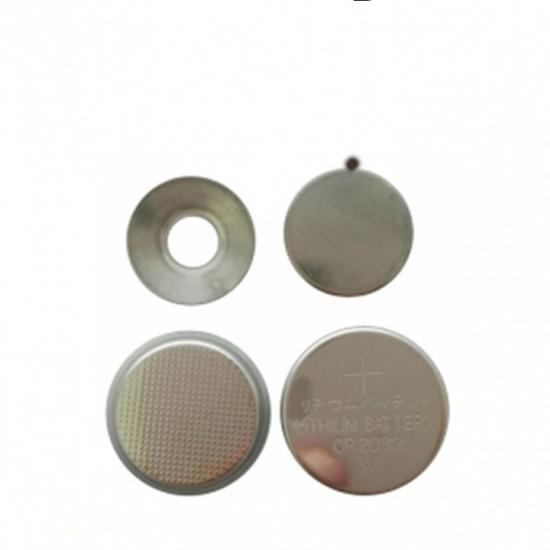
Cr2032 Coin Cell Case
Design Considerations
Shape and Size: Coin cells are characterized by their flat, circular shape which allows them to fit into compact spaces. The dimensions must be precisely manufactured to standard sizes to ensure compatibility with devices designed to use these batteries.
Sealing Gasket: Typically made from materials like nylon or polytetrafluoroethylene (PTFE), the sealing gasket sits between the top cover (negative terminal) and the case, providing insulation and preventing leaks.
Top Cover: Usually made of nickelplated steel, it forms the negative terminal and is sealed against the case using the insulating gasket.
Manufacturing Process
The manufacturing process involves precision engineering to ensure the case meets strict quality and safety standards. Techniques such as deep drawing might be used to form the thin metal sheets into the precise shapes required for coin cells. After forming, the cases undergo rigorous inspection to check for defects that could compromise the battery’s performance.
In summary, the coin cell battery case is more than just a simple container; it plays a vital role in the overall function, safety, and longevity of the battery. Its design and material selection are critical factors that contribute to the reliability of coin cell batteries across a wide range of applications.